Every 3 seconds, someone in the world develops dementia. It is the fastest-growing health crisis of our time and for decades, medicine has struggled to find meaningful prevention strategies.
But in the last ten years, a body of research has quietly built a compelling case for one of the simplest, most accessible brain health practices available: jigsaw puzzles. Not as a cure or miracle, but as a meaningful, evidence-backed tool for cognitive maintenance that costs less than a dinner out and can be done from the comfort of home.
What the Research Actually Shows
A landmark study published in the Archives of Neurology followed over 700 seniors for five years and found that those who regularly engaged in cognitively stimulating leisure activities showed significantly slower rates of cognitive decline — at nearly half the rate of the least active group.
A separate study from the University of Edinburgh found that puzzle-solving in later life was associated with better memory, processing speed, and problem-solving ability. The mechanism is what neuroscientists call cognitive reserve — the brain ability to use alternative neural pathways when primary ones are damaged. Regular cognitive stimulation builds this reserve.
Why Puzzles Specifically
They engage both hemispheres simultaneously. The logical analysis of shapes and the visual-spatial recognition of where they might fit activate left and right brain in concert — a full-brain workout few other activities provide.
They require sustained, active engagement. Unlike passive activities, puzzles demand that you do something. The brain responds to demands.
They provide mood benefits. Completing sections triggers dopamine release — making puzzling a habit that is genuinely enjoyable to maintain.
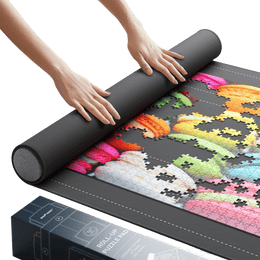
For seniors and caregivers: The biggest barrier to regular puzzling is logistics — needing a permanent table, managing loose pieces, dealing with physical limitations. The Newverest Puzzle Mat was designed with exactly these challenges in mind. Soft surface, easy roll-up, pieces stay exactly in place.
How to Build the Habit
- Start with 500 pieces. Early wins build motivation for the next one.
- Puzzle daily for 15 to 20 minutes. Consistency matters more than duration.
- Choose personally meaningful images. Places you have been, artists you love. Engaging puzzles produce more cognitive benefit.
- Puzzle with others when possible. Social engagement amplifies the cognitive benefit.
- Increase difficulty gradually. The challenge is what builds cognitive reserve.
A Gift That Gives Every Single Day
If you are shopping for a parent, grandparent, or older loved one, consider what you are actually giving when you give a puzzle mat and a stack of puzzles: daily cognitive exercise, a screen-free activity that brings genuine satisfaction, and support for brain health in one of the most evidence-backed ways available — for less than the cost of one month of a streaming subscription.
Invest in your brain health today.
The Newverest Puzzle Mat holds 1,500 pieces, rolls up between sessions, non-slip base, built to last.
Shop Now — $63.99 (Was $95.99)